One morning, I couldn’t say my son’s name. The word was there “I could see his face” but the bridge between the thought and the sound was gone. That was my stroke. And it’s where I learned the thing no rehab pamphlet told me: recovery iThat day, I couldn’t say my wife’s name. The words were there to say, “I love you” but I could barely see her face. The bridge between the thought and the sound was gone. That was my stroke. And it’s where I learned the thing no rehab pamphlet told me: recovery is emotional long before it is physical.
Neuroplasticity is real but, it doesn’t start where you think
Every good guide to stroke recovery will tell you the same true thing: the brain rewires itself through repetition. Do the movement, say the word, practice the task a thousand times and healthy tissue takes over what the stroke took. That is neuroplasticity, and it is the most hopeful fact in medicine.
But here is what the exercise lists leave out: something has to get you to repetition number one thousand. On the mornings when the word won’t come and the hand won’t close, reps are not a physical problem. They are an emotional one.
The gate most recovery plans skip: emotion
After a stroke you are not only rebuilding function. You are grieving for the person you were the day before, managing fear about whether this is as good as it gets, and holding onto an identity that suddenly feels borrowed. Left unnamed, that weight quietly cancels the practice. Named and worked through, it becomes the fuel the practice runs on. This is emotional intelligence doing the heavy lifting and it is the first gate, not an afterthought.
If you’re a caregiver, you’re part of the wiring
Caregivers often feel like bystanders to the medical work. You are not. Motivation and hope measurably shape how a brain adapts, and you are the closest source of both. What helps: showing up consistently, celebrating small wins out loud, and protecting your survivor from the story that progress has stopped. What hurts: rushing, comparing, and treating a hard day as evidence of the ceiling. You are not watching recovery. You are inside it.
A method you can actually walk: the 13 Gates
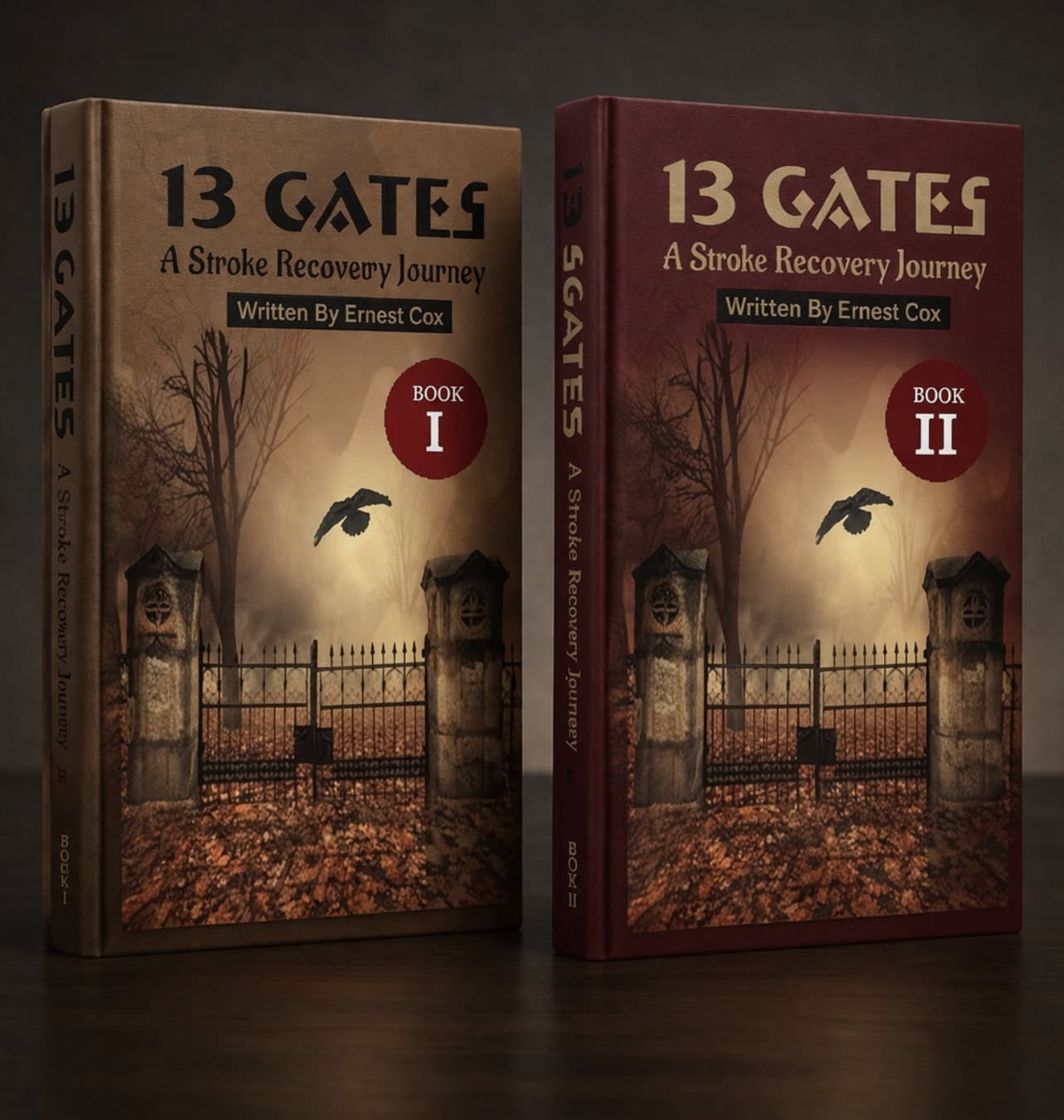
I didn’t want a memoir of surviving. I wanted a sequence anyone could follow. So I mapped what worked into thirteen gates each one pairing a piece of the neuroplasticity science with the emotional work that makes it stick. That sequence became the foundation of the wider Vertical Learning system, but it started at a hospital bed, with a man trying to say his wife’s name.
And remember, you don’t have to fight that nemesis behind the alone.
My question is